
Associate Professor Steven Salisbury
Researcher biography
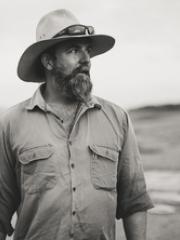
Dr Steve Salisbury is an Associate Professor in the School of Biological Sciences at The University of Queensland, where he is head of the UQ Dinosaur Lab and Director of Indigenous Engagement. He is also Research Associate at the Carnegie Museum of Natural History, Pittsburgh, Pennsylvania, USA, Associate Editor for the Journal of Vertebrate Paleontology, and a Scientific Board member of the Jurassic Foundation. He currently Chairs the Faculty of Science Indigenising Curriculum Working, and is the Faculty of Science represenative on the Indigenous Learning Sub-Committee of CAPP.
Steve is of Dutch-Indonesian and English descent, but was born and grew up in the cool, misty mountains of Dharug and Gandangarra Country. He studied biology and geology at the University of Sydney, receiving the Edgeworth David Award for Palaeontology in 1993. He then moved to the University of New South Wales (UNSW), where he completed his Honours thesis on fossil crocodilians from Murgon, south-eastern Queensland. Continuing at the UNSW, Steve travelled to Germany and the UK to complete a PhD on crocodilian locomotor evolution. He returned to Australia in 2000 to pursue a life-long dream of searching for Australian dinosaurs, and joined The University of Queensland in 2003 as a Postdoctoral Fellow. He currently lives in Tulmar (Ipswich) on Yagara/Ugarapul Country.
Steve's research focuses on the evolution of Gondwanan continental vertebrates, in particular dinosaurs and crocodilians. He is also interested in vertebrate biomechanics and using extant animals to better understand the anatomy, behaviour and evolution of extinct ones. His field-based research takes him to various parts of Queensland, the Kimberley, New Zealand and Antarctica.
For over 15 years, Steve has partnered with First Nations communities in the Saltwater Sundown Country of the West Kimberley to better understand the region's natural and cultural heritage, in particular its dinosaur tracks. He is passionate about decolonising and transforming aspects of palaeontology and empowering First Nations voices in the natural sciences. He is now trying to use some of his experiences in palaeontology to help develop and implement teaching and research practices that are more respectful and understanding of First Nations sovereignty, perspectives and ways of knowing.