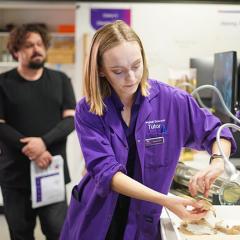
student in lab

Experience Genetics (school groups only)

22 June 2026 9:00am24 July 2026 2:00pm
School groups are invited to join other Year 12 biology school groups to improve your understanding of Unit 4 subject matter and practice laboratory skills relevant to genetics.
DNA

Queensland Biology Winter School, Year 12

29 June 2026 9:30am30 June 2026 3:30pm
The UQ Year 12 Queensland Biology Winter School (12QBWS) will provide you with a deep dive into contemporary topics in genetics, phylogenetics, evolutionary biology, and biochemistry. You'll also explore how many other biological disciplines are interconnected.
hands holding screen projecting data

International Baccalaureate Research Skills Program

1 July 2026 9:00am3:30pm
The International Baccalaureate Research Skills Program provides comprehensive development in core research skills for Year 11 IB students.
pink axolotl

Queensland Biology Winter School, Year 11

2 July 2026 9:30am3 July 2026 3:30pm
The UQ Year 11 Queensland Biology Winter School (11QBWS) offers an in-depth exploration of contemporary topics such as biodiversity, cell biology, animal and plant physiology, and biophysics. You'll also discover how these and other biological disciplines are interconnected.
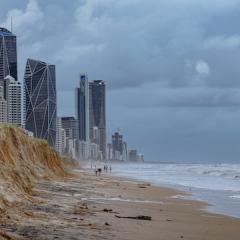
Gold Coast eroded beaches after the cyclone Alfred

Experience Geographical Science (school groups only)

17 July 2026 9:00am1:30pm
School groups across Years 10 to 12 Geography are invited to join us for a curriculum aligned day of lectures and practicals that extend core learning from the Geography syllabus.
bird

Experience Ecology (school groups only)

26 October 2026 9:00am13 November 2026 2:00pm
Join us to complete 3 mandatory practicals in Unit 3 senior biology. You'll also take part in a computer-based workshop on data analysis and scientific writing.
Saini Samim

Dr Saini Samim - Volcanoes and Human Origins: Unlocking Timelines of Early Human Evolution with High-Resolution Tephrochronology

27 February 2026 11:00am12:00pm
How precisely can we date the timeline of early human evolution? The Turkana Basin in northwestern Kenya is one of the most important paleoanthropological regions, preserving hominin fossils and archaeological evidence within sedimentary sequences interbedded with volcanic ash layers (tuffs). These tuffs act as the key to establishing a temporal framework for understanding when key evolutionary and behavioral changes occurred.

We combine high-resolution ⁴⁰Ar/³⁹Ar geochronology combined with grain-specific major and trace element geochemistry to generate distinct temporal and geochemical fingerprints for tuffs within the Nachukui Formation, west Turkana. By refining age estimates and enhancing tuff identification, this study aids intra- and inter- basin correlation, improves the chronology of key paleoanthropological sites, provides insights into silicic volcanic processes, and explores the possible links amongst recurrent volcanism, paleoenvironmental changes, and hominin evolution.
A photo of Andy Baker

Professor Andy Baker - Caves and their stalagmites: linking climate to groundwater recharge

6 March 2026 11:00am1:00pm
Title: Caves and their stalagmites: linking climate to groundwater recharge

Abstract: Groundwater is a natural resource supporting industry, agriculture and water supply worldwide. It is especially important in drier, water-limited parts of the world, where it can provide a resilient water source in times of drought. Despite this economic importance, we do not know how the replenishment of groundwater (technically known as groundwater recharge) relates to climate phenomena such as El Niño and La Niña. This is increasingly important as we adapt to climate change and associated climate extremes, such as the recent rare occurrence of three consecutive La Niña years. This knowledge gap can be filled by using caves, uniquely situated between the land surface and the groundwater, as observatories of groundwater recharge in the past, present and future. This lecture will explain how we can generate new knowledge by combining the analysis of cave stalagmites to understand when recharge occurred in the past; underground hydrological monitoring today to work out how much rainfall is needed and the associated weather and climate patterns; and climate and hydrological modelling to identify when this replenishment will occur in the future. Using these approaches, we can identify the climate conditions most likely to lead to the rainfall recharge of groundwater, and how this recharge of groundwater will change with future climate change. This new knowledge can be used to help identify where groundwater can be sustainably used for water supply and industrial use in the future and to mitigate the impacts of longer and more intense droughts that are predicted with climate change.

Dr Thomas Schmidt - Pest evolution on human timescales

13 March 2026 11:00am12:00pm
Name: Dr Thomas Schmidt
University: The University of Sydney

As genomic data have become increasingly cheap to generate, they have seen a range of new uses for understanding pest populations. This talk will first detail how a big international dataset has been built to track recent evolution in mosquitoes, covering fundamental evolutionary processes such as repeated adaptation and long-distance dispersal as well as applied biosecurity questions such as inferring incursion origins and tracking insecticide resistance evolution. The second part of the talk will show how genomic data can be used to infer the natural histories of poorly understood and enigmatic pests such as the shot-hole borers that have recently invaded Australia. The talk will provide a synthesis of how evolutionary genomic pest studies can be shaped to answer applied and fundamental questions.
Amy Zanne

Dr Amy Zanne - Plant afterlife: stories from two decayers

20 March 2026 11:00am12:00pm
Title: Plant afterlife: stories from two decayers

Abstract: Wood is the largest above ground terrestrial biotic store of carbon. These stores can persist for centuries to millennia. Termites and fungi are the two major biotic decayers that break down wood, releasing carbon and nutrients back to the environment. This talk will explore how wood construction and environmental conditions shape the relative abilities of these two decayers to do their jobs, leading to consequences for ecosystem processes such as the rates and forms that carbon is cycled during the plant afterlife.
Courtney C. Murdock

Assoc Prof Courtney C. Murdock - Landscapes of infection: the role of the environment in shaping vector-borne disease transmission

27 March 2026 11:00am12:00pm

Title: Landscapes of infection: the role of the environment in shaping vector-borne disease transmission

Abstract: Despite the recent gains in reducing the overall global burden of parasites like malaria, vector-borne diseases still account for 17% of all infectious diseases and cause 700,000 deaths in humans annually. Further, climate and land use change are dramatically modifying the landscapes across which vector-borne pathogens are transmitted. Our research applies ecological and evolutionary theory to understand how environmental variation will shape the outcome of the host- pathogen interaction, and the transmission and control of vector-borne diseases now and in the future. I value cross-scale inference, with research questions that span multiple biological scales and mosquito-pathogen systems (Aedes – Zika (ZIKV), Dengue (DENV) viruses, Culex - West Nile virus (WNV), and Anopheles – rodent and human malaria. My research is trans-disciplinary and integrative, adopting theory from the fields of ecology, evolutionary biology, genetics, virology, parasitology, medical entomology, statistics, and immunology. Finally, we use a combination of laboratory experiments, descriptive and experimental studies in the field, and mathematical modeling to answer questions on how environmental variation affects three central areas: 1) the mosquito-pathogen interaction, 2) pathogen transmission dynamics, and 3) evaluating the efficacy of different intervention strategies to answer critical questions on the effects of climate and land use change on current and future vector-borne disease transmission and control.
Jacqueline Loos

Assoc Prof Jacqueline Loos - Social-Ecological Approaches to Biodiversity Conservation and Restoration: A Critical Environmental Justice Perspective

17 April 2026 11:00am12:00pm
Efforts to conserve and restore biodiversity increasingly aim to address demands for environmental justice, yet substantial theoretical and practical challenges remain. This talk examines how social-ecological approaches to biodiversity conservation and restoration engage with environmental justice, using it as a critical analytical lens. Drawing on empirical research and practice-based experiences from East and South Africa, alongside selected European examples, I explore how governance processes and implementation contexts may influence justice outcomes in conservation and restoration initiatives and research. The presentation highlights key tensions, constraints, and opportunities emerging in practice and invites discussion on the relevance of these insights in other regional contexts.

Speaker: Dr Fabio Cortesi

24 April 2026 11:00am12:00pm
Details to follow.
Jon Day

Dr Jon Day - How GREAT is the Great Barrier Reef today? The good, the bad… and some ugly aspects of this iconic World Heritage Area

1 May 2026 11:00am12:00pm
Title: How GREAT is the Great Barrier Reef today?
The good, the bad… and some ugly aspects of this iconic World Heritage Area

Abstract: Despite its international recognition, and being World Heritage listed, the global reputation of the Great Barrier Reef (GBR) has over the past 50 years experienced some amazing highs as well as several disturbing lows. This presentation will be in three parts, firstly, it will outline globally innovative aspects of marine management for which Australia should be rightly proud, resulting in the GBR being labelled ‘arguably the world’s best managed MPA’. I will then proceed to examine why the most recent official government assessment rates the outlook for the GBR as ‘very poor’, with the cumulative pressures from a wide range of increasing threats leading to the GBR being in the international spotlight and potentially listed as ‘In-danger’. Finally, a few alarming aspects of marine mismanagement in the GBR will also be discussed.

Speaker: Assoc Prof Aude Bernard

8 May 2026 11:00am12:00pm
Details to follow.

Speaker: Professor Marcus R. Kronforst

22 May 2026 11:00am12:00pm
Details to follow.

Pages

Professor Kathleen Benison - Salty Secrets about the Search for Life on Mars

20 February 2026 11:00am12:00pm
Title: Salty Secrets about the Search for Life on Mars

Abstract: Salt minerals, including halite and gypsum, exist in various crystal types, grain types, and lithologies on Mars and record a complex history of saline surface waters and groundwaters on the planet. As salt minerals on Earth grow, they trap hydrosphere, atmosphere, lithosphere, and biosphere in primary fluid and solid inclusions. Observations and analyses of fluid and solid inclusions can reveal environmental conditions under which the host salt mineral precipitated. In addition, entrapped microorganisms and organic compounds can be detected and identified. There may even be the potential for microorganisms to survive within fluid inclusions for hundreds of millions of years. If live ever existed on Mars, it may have been preserved in salt minerals. Therefore, any Martian salt minerals brought to Earth should be examined for potential biosignatures.
Professor Dorothy Hill in later life participating in a geological field trip

Dorothy Hill Symposium 2025

5 November 2025 9:00am6 November 2025 4:00pm
Researchers from UQ and beyond, higher degree researchers, postgraduate and undergraduate students, industry and government collaborators, secondary teachers and their students will share in a celebration of academic achievement and strength of our diverse, inclusive and vibrant community.
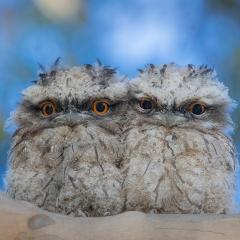
2 tawny mouth owls

Experience Ecology (school groups only)

29 October 2025 9:00am14 November 2025 2:00pm
Join us to complete 3 mandatory practicals in Unit 3 senior biology. You'll also take part in a computer-based workshop on data analysis and scientific writing.

Speaker: Dr Bruno Vieira Ribeiro

19 September 2025 11:00am12:00pm
Speaker: Professor Khoa Hong

EMCR

12 September 2025 11:00am12:00pm
Speaker: Maddie James

Seminar Series

5 September 2025 11:00am12:00pm
Speaker: Professor John Foden

Seminar Series

22 August 2025 11:00am12:00pm
Speaker: Dr Romain Vaucher

Seminar Series

15 August 2025 11:00am12:00pm

EMCR Showcase

8 August 2025 11:00am12:00pm
Speaker: Dr David Kainer and Dr Timothy Staples
Gold Coast eroded beaches after the cyclone Alfred

Experience Geographical Science (school groups only)

1 August 2025 9:00am2:00pm
School groups across Years 10 to 12 Geography are invited to join us for a curriculum aligned day of lectures and practicals that extend core learning from the Geography syllabus.

Molecular mechanisms underlying rapid evolution during invasion

11 July 2025 11:00am12:00pm
Speaker: Associate Professor Lee Rollins
plants in science beakers

Queensland Biology Winter School, Year 12

7 July 2025 9:30am8 July 2025 4:00pm
The UQ Year 12 Queensland Biology Winter School (12QBWS) explores contemporary topics in genetics, phylogenetics, evolutionary biology, biochemistry, and how many biological disciplines are interconnected.
school of fish

Queensland Biology Winter School, Year 11

30 June 2025 9:30am1 July 2025 4:00pm
The UQ Year 11 Queensland Biology Winter School (11QBWS) explores contemporary biology topics, including biodiversity, cell, animal, and plant physiology, biophysics, and how diverse biological disciplines are interconnected.
student using lab equipment

Experience Genetics (school groups only)

25 June 2025 9:00am30 July 2025 1:45pm
Complete practicals on DNA recombination, extraction, amplification and analysis, and consolidate your learning with a quiz.
3 people using 2 laptops

International Baccalaureate Research Skills Program

7 April 2025 9:30am8 April 2025 3:30pm
The inaugural International Baccalaureate Research Skills Program (IBRSP) provides comprehensive development in core research skills for Year 11 IB students, and the opportunity to engage with professional researchers to learn about exciting scientific research taking place across UQ.
woman using a computer

Data are Fun?! for Senior Science Teachers (online)

28 March 2025 9:45am12:30pm
Due to capacity of the in-person offering, an online option is now available. We'll cover best practice in data processing, analysis and report preparation for new and returning teachers in senior sciences.
graph visualisations on a laptop

Data are Fun?! for Senior Science Teachers

21 March 2025 9:45am1:45pm
We'll cover best practice in data processing, analysis and report preparation for new and returning teachers in senior sciences. Join us in-person only at Brisbane South State Secondary College. THIS EVENT IS NOW FULLY BOOKED.
teenage girl wearing protective goggles doing experiment

STEM Spotlight (Year 8 & 9)

22 November 2024 9:00am2:15pm
A free on-campus experience for school groups of Year 8 and Year 9 students interested in science, technology, engineering, and mathematics (STEM).
two tawny frogmouth owls

Experience Ecology (school groups only)

28 October 2024 9:00am19 November 2024 2:00pm
Join us to complete 3 mandatory practicals in Unit 3 senior biology. You'll also take part in a computer-based workshop on data analysis and scientific writing.
frilled necked lizard

Ecology Extravaganza Vol. 2

6 September 2024 4:00pm6:00pm
Ecology Extravaganza Vol. 2 focusses on new and more explicit subject matter and statistical analyses introduced in the 2025 Senior Biology syllabus. It is delivered live online (via Zoom) and recorded. All registrants will receive resources and recordings that can be accessed indefinitely.
sugar dlider

Hidden Treasures at Hidden Vale

28 August 2024 2:45pm5:00pm
Invited lead biology teachers and science department heads from schools in the Lockyer Valley, Toowoomba, and surrounds attend an exclusive professional development opportunity at Hidden Vale Research Station.
Dr G presenting

Data are Fun!? (The Prequel)

9 August 2024 4:00pm6:00pm
Data are Fun!? (The Prequel) is specifically for middle school science teachers who are new to science, teaching out-of-field, or experienced teachers who would benefit from foundational introduction to data analysis, interpretation, graphical representation and scientific writing genre conventions. It is delivered live online (via Zoom) and recorded. All registrants will receive resources and recordings that can be accessed indefinitely.
student using lab equipment

Experience Genetics (school groups only)

9 July 2024 9:00am19 July 2024 2:00pm
Complete practicals on DNA recombination, extraction, amplification and analysis, and consolidate your learning with a quiz.

Pages